Showing posts with label Tip of the Week. Show all posts

Friday, April 20, 2012

Aromatherapy/Botanicals Tip of the Week

Source

It's starting to get warmer and the days are getting longer which, for many of us, means more time spent outdoors. As much as we may love to get outside, the one drawback are those annoying mosquitoes that are always hovering around. Today I'm going to be sharing a recipe for a natural insect repellent, using essential oils. Enjoy!

Natural Insect Repellent
(from AromaWeb)

4-ounce clean spray bottle with a fine mist setting (do not use a bottle that previously contained cleaning products or hair products such as hair spray)
1.5 ounces distilled water and 1.5 ounces high-proof alcohol (or 3 ounces distilled water)
15 drops citronella essential oil
10 drops lavender essential oil
10 drops eucalyptus essential oil
5 drops lemongrass essential oil

Fill the spray bottle with the vodka/water mixture (or just water) and add the essential oils. Shake before each use. Spray on skin and clothing before going outside.

Friday, April 13, 2012

Aromatherapy/Botanicals Tip of the Week

Source
As you may already know, I've been practicing yoga for a few years now and I'm always interested in ways to improve my yoga sessions. So I was pleased to come across this great article from Aura Cacia entitled "Enhancing Yoga with Essential Oils". The article goes over the benefits of using aromatherapy during your yoga practice.

You can find the full article here, but I'll give you a little snippet for now:

Benefits of Essential Oils

Vetiver, ginger and patchouli will be grounding and earth-connecting while sandalwood and cedarwood are stabilizing, strengthening and centering–all of these essential oils will help with balance and stability in your yoga poses.

Myrrh, frankincense, eucalyptus and rosemary encourage the flow of energy, self-expression and help you achieve steady, deep inhalations and exhalations. (Mastering your breathing process is as important to successful yoga practice as the poses.)

Lavender, geranium and chamomile are calming and relaxing.

Bergamot, lemon and orange lend a sense of fulfillment and spiritual nourishment to your yoga quest.

Neroli, jasmine, ylang ylang and rose promote transcendence and spiritual expression.

Friday, April 6, 2012

Aromatherapy/Botanicals Tip of the Week

Being a candle maker, I typically burn candles at home to keep our rooms smelling fresh and clean. But sometimes you want something quicker that you can just spritz before leaving the room. In the past, I've used commercial room sprays but I always found them to be irritating. Then, when we got our cat I noticed she would wince and get all squinty whenever I used a room spray (even though I've always been careful not to spray it in her direction). I felt so bad about possibly irritating my kitty's eyes that I started looking for a recipe for a natural room spray and I cam across this super easy version. The original recipes called for only 10 drops of essential oils but it was such a slight aroma, it was practically invisible. So we bumped it up a bit. Play around with the amount of essential oils and figure out what works best for your personal preference. Enjoy!


Natural Room Spray
(Makes 8 ounces)

1/2 cup vodka (the cheap-o stuff will do)
1/2 cup water
20-30 drops of your favorite essential oils (I used 14 drops of rosemary and 14 drops of juniper)

Combine all ingredients in an 8-ounce spray bottle. Shake before each use.


Friday, March 30, 2012

Aromatherapy/Botanicals Tip of the Week

Source

Last week I shared a recipe from Mountain Rose Herbs for a natural deodorant. This week, I'll be showing you another twist on the same recipe--this time using orange and vetiver in place of cedarwood and juniper ;)


Natural Deodorant Spray

Ingredients:
1.5 ounces witch hazel extract
10 drops sweet orange essential oil
1 drop vetiver essential oil

Directions:
Pour all ingredients into a 2-ounce glass bottle and top with a little more witch hazel. Cap with a mister top and shake well before spritzing liberally under your arms.

Friday, March 23, 2012

Aromatherapy/Botanicals Tip of the Week

Source

For this week's Tip, I'm sharing a nifty recipe I found from Mountain Rose Herbs for a natural deodorant. I love using juniper, so I was really pleased to find it featured in this recipe! I'm planning to try this one out in the next week or so and will be sure to let you guys know how I like it.

Natural Deodorant Spray

Ingredients:
1.5 ounces witch hazel extract
10 drops cedarwood essential oil
2 drops juniper berry essential oil

Directions:
Pour all ingredients into a 2-ounce glass bottle and top with a little more witch hazel. Cap with a mister top and shake well before spritzing liberally under your arms.


PS: You may recall I had posted a Tip about the use of ginger supplements to help relieve inflammation (which I started taking for my foot pains). Well, I've been taking about 1,000 mg twice a day for a few weeks now and I've really noticed a difference. Although my pain is not completely gone and I do still have some days that are worse than others, it has been feeling significantly better. I highly recommend it!

Friday, March 9, 2012

Aromatherapy/Botanicals Tip of the Week

Source
Source

It’s getting to be about that time again—allergy season. While I am fortunate enough not to have allergies, I know many people who do and I feel for them. Luckily, I came across quite a few ways to utilize the benefits of aromatherapy to relieve common allergy symptoms.

One of the most common symptoms with allergies is inflammation of the nasal passages. Because German chamomile acts as an anti-inflammatory, it can be beneficial when used in a massage oil blend (simply add 10 drops to 1 ounce of tour favorite carrier oil). Other oils that are particularly helpful in relieving symptoms of hay fever include eucalyptus, myrtle, lavender, peppermint, rosemary, thyme, and tea tree.

Another common complaint during allergy season are asthma flare-ups. To help open up your airways, oils such as rose, frankincense, and clary sage can be beneficial. Try adding a few drops of the oils to a hot bath or create a homemade facial steam using 1 drop of oil per cup of water.

Note: It is particularly important that anyone with allergies or asthma use caution when trying a new essential oil blend. You should always do a quick sniff test to gauge how your body reacts to each oil before using them. 

Friday, March 2, 2012

Aromatherapy/Botanicals Tip of the Week

Source


I'm not sure if it's due to these cold winter months or what, but I've been having some really pesky muscle aches lately. I've noticed that my neck becomes especially sore and achy, most likely a result of sitting at a computer desk for hours each day. To relieve my aches I've tried aspirin and a heating pad, both of which helped a bit, but there was still some pain. I'm not sure why I didn't think of it before, but my next step is to try some aromatherapy for my pain.

Two oils recommended to relieve pain are lavender and peppermint. According to James Duke's The Green Pharmacy, some essential oils (such as lavender) can reduce the flow of nerve impulses such as those that signal pain. Peppermint is helpful for pain relief because it contains menthol, which has an anesthetic effect. Try using a few drops of lavender and peppermint in a base oil (such as jojoba) and massage it into the affected area. For added benefit, also include eucalyptus which can aid the absorption of the lavender and peppermint, boosting their pain-relieving effects.

Friday, February 24, 2012

Aromatherapy/Botanicals Tip of the Week

Source

Last week I went to my podiatrist and was confirmed a diagnosis of tenosynovitis, which is basically just inflammation of the protective sheath around the tendon in my foot. While it's not anything really serious right now, it does cause intense pain throughout my foot and up my leg, which often prevents me from being my regular, zany self. I've already tried physical therapy, two weeks of rest (not as fun as it sounds!), and custom orthotics (yes, like the ones old people wear)--none of which have made a darn bit of difference.

So, in an attempt to at least control my symptoms, I sought to find an herbal remedy for inflammation. In my research, I found that both turmeric and ginger can be helpful in treating inflammation. Because turmeric is not readily available at my local drugstore, I decided to give ginger a try (plus, I'm kind of obsessed with ginger right now for whatever reason). If taking turmeric, try 400-600 mg  three times daily. If using ginger, take 500-1,000 mg twice daily. Be patient, though--it can take up to two months to see the results. With that said, I'll check in with you guys again after a few months and let you know if my symptoms subside!

Friday, February 17, 2012

Aromatherapy/Botanicals Tip of the Week

Source


We've had a fairly mild winter so far, which has certainly reduced the effect of those dreadful winter blues. But every once in awhile, on cold and gray days, I still find myself feeling tired and unmotivated. It's especially tough after coming home from a long, stressful day at work and then trying to gear up to exercise or go to yoga.

To help battle the blues, I figured I'd turn to aromatherapy and see what I could find in the way of energizing essential oil blends. I came across this great recipe for a eucalyptus spritzer on Aura Cacia's website. The combination of minty, floral, and citrus tones sounds like the perfect remedy for getting you energized and ready to move!


Eucalyptus Workout Spritzer
(From Aura Cacia)
This activating formula is great to carry in the gym. Whenever a workout routine needs a little boost, simply spritz your face lightly and inhale the fresh, invigorating aroma.
 
20 drops eucalyptus essential oil
40 drops lavender essential oil
20 drops lemon essential oil
10 drops petitgrain essential oil
10 dash spearmint essential oil
3 ounces distilled water
 
Add no more than 36 drops of this blend to 3 ounces of distilled water. Shake vigorously and add to a bottle with a spray atomizer attachment. Be sure to shake the bottle before each application.

Note: The directions say to spritz the mixture on your face, but because it has eucalyptus (which can be irritating on some skin types and can also be dangerous if it gets in your eyes), I would caution to spritz it on your body, and even your neck, but to be careful about getting it anywhere on your face.

Friday, February 10, 2012

Aromatherapy/Botanicals Tip of the Week

Source

I know I've been remiss in posting my Weekly Tips and believe me, I've really missed working on them! My day job has been insane, leaving me zero extra time to research a new topic. But I've finally put something together for you guys!

Ever since I did homemade soaps and shampoos for Christmas presents, I've been really excited to dive into the world of soap-making. In the bit of research that I've done so far, I could only really find details on making soap using lye (which can be very dangerous and kind of scares me as a newbie to soap-making) or pre-made bases (which often include a lot of synthetic ingredients, although I have found one or two places that make all-natural soap bases).

Finally, I stumbled across this post on an awesome blog called Crunchy Chicken, which features tons of information on sustainable and non-toxic living. In her post, Deanna Duke (the creator of Crunchy Chicken and author of The Non-Toxic Avenger) talks about a few plants that are naturally high in saponin, making them suitable as natural soap ingredients.

Bouncing Bet (also known as soapwort) is a great option because it grows in most areas of the United States, plus it has really pretty flowers  ;) Deanna also mentions that soapwort smells like cloves, which makes me so excited to start growing it! I am definitely adding this plant to my garden this spring. And when  I finally do try making soap with it, I'll be sure to share my own recipe and photos with you guys!

Here is the recipe that Deanna shares on her blog:

Bouncing Bet Natural Soap
1/2 cup fresh leaves and/or root (or 1/4 cup dried) soapwort
4 cups water (preferably distilled or rain water)

Add the leaves (and/or root) to the water and simmer until it becomes sudsy, about 20 minutes. 

For the full post on Crunchy Chicken, click here.

Friday, January 13, 2012

Aromatherapy/Botanicals Tip of the Week

Source
Most of us at one point or another have endured those pesky (and embarrassing!) flakes known as dandruff. Every year, I notice that my scalp tends to become drier during the winter months, most likely because of the dry environment that's created from keeping the heat on all the time.

Rather than turning to chemical-laden dandruff shampoos, I set out to find a natural remedy and the first thing I came across was tea tree oil. Dandruff is typically caused by a fungus on the scalp and tea tree oil possesses strong anti-fungal and antiseptic properties, making it a great remedy for a flaky scalp. There are plenty of dandruff shampoos on the market that include tea tree oil, but if going this route, be sure to look for a natural variety such as Nature's Gate. My boyfriend and I have been using Nature's Gate Tea Tree Calming Shampoo for about a week now and haven't noticed any more dryness!

You can also make your own tea tree shampoo by simply adding 10 drops of tea tree oil to 8 ounces of your favorite shampoo (again, preferably a variety that uses natural ingredients).

Another remedy that I came across are soybeans. Soybeans are high in B vitamins (such as biotin) and zinc, so they're great for helping improve the health of your hair and skin, which in turn helps remedy dandruff! According to The Green Pharmacy by James A. Duke PhD, eating just one handful of soybeans each day should be enough to help keep your scalp healthy and flake-free. Plus, they're really tasty!

Note: If you want to use tea tree oil without putting it in your shampoo, be sure to dilute it with a base oil (such as jojoba oil or sweet almond oil) before applying to your scalp.

Friday, January 6, 2012

Aromatherapy/Botanicals Tip of the Week


Jasmine is known by most as a romantically fragrant flower, but it also has many uses in aromatherapy.  For example, jasmine essential oil can be helpful in relieving hormonal problems such as dysmenorrhoea and is said to help reduce pain during childbirth. Jasmine is also an effective remedy for battling depression and anxiety because the scent has a sedative-like effect and enhances mental functioning.

If you're like me, you sometimes succumb to the winter blues (especially after long months of cold, cold, and more cold here in the Catskills!) and need a little pick-me-up. This milk bath recipe from Aura Cacia's website seems like the perfect remedy!

Soothing Milk Bath
(from Aura Cacia essential oils, www.auracacia.com)
Add 3 drops of jasmine, 6 drops of lavender, 2 drops of clary sage and a single drop of bergamot oil to 3 ounces of whole milk. Add this to warm bath water and let the gentle aroma of jasmine work its magic on the senses.

Sunday, December 18, 2011

Aromatherapy/Botanicals Tip of the Week

Sunday morning in the Catskills (view from my living room window)

As you may recall, a few weeks ago I posted about some homemade bath goodies I had made. Last week I shared with you a recipe for almond oil cleanser and today I'll be showing you how to make a great moisturizer to go with it.


Basic Moisturizer
This is another great recipe from the Winter 2011 issue of Herb Quarterly. I absolutely love this moisturizer because it's so rich and creamy without clogging my pores or making my skin feel greasy. I gave some to my sister to try as well, and now her and her boyfriend are obsessed with it (and I've heard my Mom has been stealing it too haha).

I've been using the almond oil cleanser and this moisturizer every day for about two weeks now and I've been really happy with the combo. My skin has been super soft and smooth--none of that nasty flaking that happens so often during the cold winter months. I highly recommend both of these! Plus, they're really easy to make!

1/4 cup sweet almond oil (or light sesame or sunflower oil)
1/4 cup stearic acid powder
1/2 teaspoon baking soda
1 cup distilled water

Combine the oil and stearic acid powder and heat gently in the microwave (or on the stove) until melted. Combine the baking soda and water and heat up until it's roughly the same temperature as the oil mixture (but be careful not to let it come to a boil). In a blender or food processor, add the oil mixture, then slowly add the warm water mixture until you have a light cream. (After trying it this way, I think it might have been easier to just mix by hand because it made a big mess in my blender, but try it and see what works best for you.) Let cool completely (you may need to stir it a few times while it cools to keep the oil and water from separating). Store in a clean container in a cool, dry spot. (The recipes says it makes 12 ounces but my batch filled two 4-ounce containers.)

To use, massage a small amount into clean skin after cleansing.

Next time I make a batch of this moisturizer, I would love to try adding some essential oils to give it a fragrance. Instead of using as a facial moisturizer, I'd instead use it as a body cream. If you end up trying this, please let me know how it goes!  :)

Friday, December 9, 2011

Aromatherapy/Botanicals Tip of the Week

Last weekend, I made some homemade bath goodies. Among these, was a facial cleanser made from sweet almond oil and honey. The recipe below comes from the Winter 2011 issue of Herb Quarterly, a wonderful publication chock full of great tips and recipes for pretty much anything you can think of.


Almond Oil Cleanser
This cleanser is perfect for dry skin because the sweet almond oil is extremely moisturizing while still light so that it doesn't clog your pores.

2 tablespoons water
2 tablespoons honey
1/2 cup sweet almond oil

Mix together all ingredients by hand until well mixed (I used a 4-ounce container, which worked perfectly). To use, place a small amount in the palm of your hand and massage into your skin. Rinse well with warm water and pat dry.

Just a little personal note...The first time I used this cleanser, I was a bit disappointed in how long it took to feel like the oil fully rinsed off, but once I dried my face I noticed that my skin was left feeling wonderfully soft and moisturized. So, don't be turned off by the first impression--this cleanser is definitely worth it, especially during the winter months when your skin is prone to becoming dry and irritated!

Friday, December 2, 2011

Aromatherapy/Botanicals Tip of the Week

Today is part 2 of my segment on recipes from the Fragrant Waters workshop at the Cooperstown Farmers Museum. For the first part, I shared a recipe for lavender water and now I'll show you guys how to make rose water.

Like lavender water, rose water can also be wonderful in baked goods and can also be used as a natural facial toner when made without alcohol.

Rose Water
Ingredients:
3 1/2 quarts water
1/2 quart vodka (any cheap vodka will do, no need to buy the expensive stuff!)
12-15 drops all-natural rose essential oil

Directions:
Pour the vodka into a container large enough to hold at least 4 quarts of liquid. Add 12-15 drops of rose oil and shake vigorously. Add enough water so that the total mixture is about 1 pint shy of a gallon. Shake again. Add the remaining water to make 1 gallon. Filter the water using a coffee filter, then pour into amber glass bottles to store (the dark bottle helps keep the mixture from spoiling).

Friday, November 18, 2011

Aromatherapy/Botanicals Tip of the Week

Last weekend I had the pleasure of attending a workshop at the Cooperstown Farmers Museum (click here for details on all of their upcoming programs), where we learned how to make several wonderful recipes from an old pharmaceutical book, Encyclopedia of Practical Receipts and Processes (which can be found on Google Books if you're interested). The "Fragrant Waters" workshop was held in the historic village's pharmacy building, which was originally built in 1832 and owned by Dr. Freeborn Garrison Thrall in Hartwick, NY.

Cooperstown Farmers Museum Pharmacy

The building itself is an amazing piece of history--the folks at the Farmers Museum even went as far as to build historically accurate shelving units and work-counters based on building plans from old pharmaceutical guides. I swear, the second you walk in there you feel like you're transported back in time, it's so neat.

That atmosphere only made this workshop even cooler because, not only were we lucky even to have someone teaching us historic recipes, but we were doing it in an authentic 1800s pharmacy, complete with a cozy wood-burning stove and shelves upon shelves of beautiful glass bottles holding all sorts of natural concoctions (made by the resident "pharmacist" in the Village, of course).

For the next few weeks, I will be sharing with you the recipes that we learned during this workshop. They can also be found in Encyclopedia of Practical Receipts and Processes on Google Books, along with many, many others.

So, let's kick this off with my favorite of the bunch: lavender water! Because this lavender water is made with alcohol, it's really more suitable for culinary uses, but you can also substitute the alcohol for water if you want to make a lavender water to be used in a bath or on your skin. If you do replace the alcohol with water, just note that the liquid will eventually spoil since the alcohol would normally act as a preservative.

Lavender Water
Ingredients:
3 1/2 quarts water
1/2 quart vodka (any cheap vodka will do, no need to buy the expensive stuff!)
25 drops all-natural lavender essential oil

Directions:
Pour the vodka into a container large enough to hold at least 4 quarts of liquid. Add 25 drops of lavender oil and shake vigorously. Add enough water so that the total mixture is about 1 pint shy of a gallon. Shake again. Add the remaining water to make 1 gallon. Filter the water using a coffee filter then pour into amber glass bottles to store (the dark bottle helps keep the liquid from going bad).


Friday, November 11, 2011

Aromatherapy/Botanicals Tip of the Week

I just discovered this great blog maintained by the National Association for Holistic Aromatherapy (NAHA). Their November post was written by Gina Rafkind, an Aromatherapy Consultant. In her post, Rafkind explains how aromatherapy can be helpful for relieving anxiety. This sparked my interest because my sister has struggled with anxiety for several years and at one point even suffered from anxiety-induced seizures. Now that I have some reliable information on using aromatherapy to treat anxiety, I'm definitely going to pass this along to my sister! Hopefully she can use aromatherapy to supplement her current treatment rather than solely relying on synthetic medications.

In particular, Rafkind highlights specific oils, including ylang ylang, chamomile, sandalwood, and lavender. She also goes into detail about exactly how aromatherapy triggers your sense of smell in order to redirect your thoughts away from anxiety. For more information on her helpful suggestions, visit the post here.

Friday, November 4, 2011

Aromatherapy/Botanicals Tip of the Week

Source

For today's Tip of the Week, we'll be looking at coriander, which is the dried seed of cilantro. This post was inspired by a dinner I made the other night, which called for quite a bit of cilantro. My boyfriend and I love integrating cilantro into our meals because it has such a fresh, green taste that enhances pretty much every sort of dish. I was rinsing the cilantro and began to wonder why I've never come across anything about cilantro being used in herbal medicine. I did a bit of research and found that, while cilantro isn't quite as common in herbalism, its sibling coriander, is.

According to The Power of Holistic Aromatherapy by Christine Stead, coriander can be used internally to relieve flatulence and stomach cramps. You can also add 2-3 drops of coriander oil to 1 teaspoon of a base oil to create a massage oil, which can be helpful for pain associated with rheumatism. Stead also mentions that coriander pairs well with other aromatherapy oils such as bergamot, lemon, neroli, orange, and cypress.

So there you go! Yet another herb to add to your inventory!

Friday, October 21, 2011

Aromatherapy/Botanicals Tip of the Week

Source
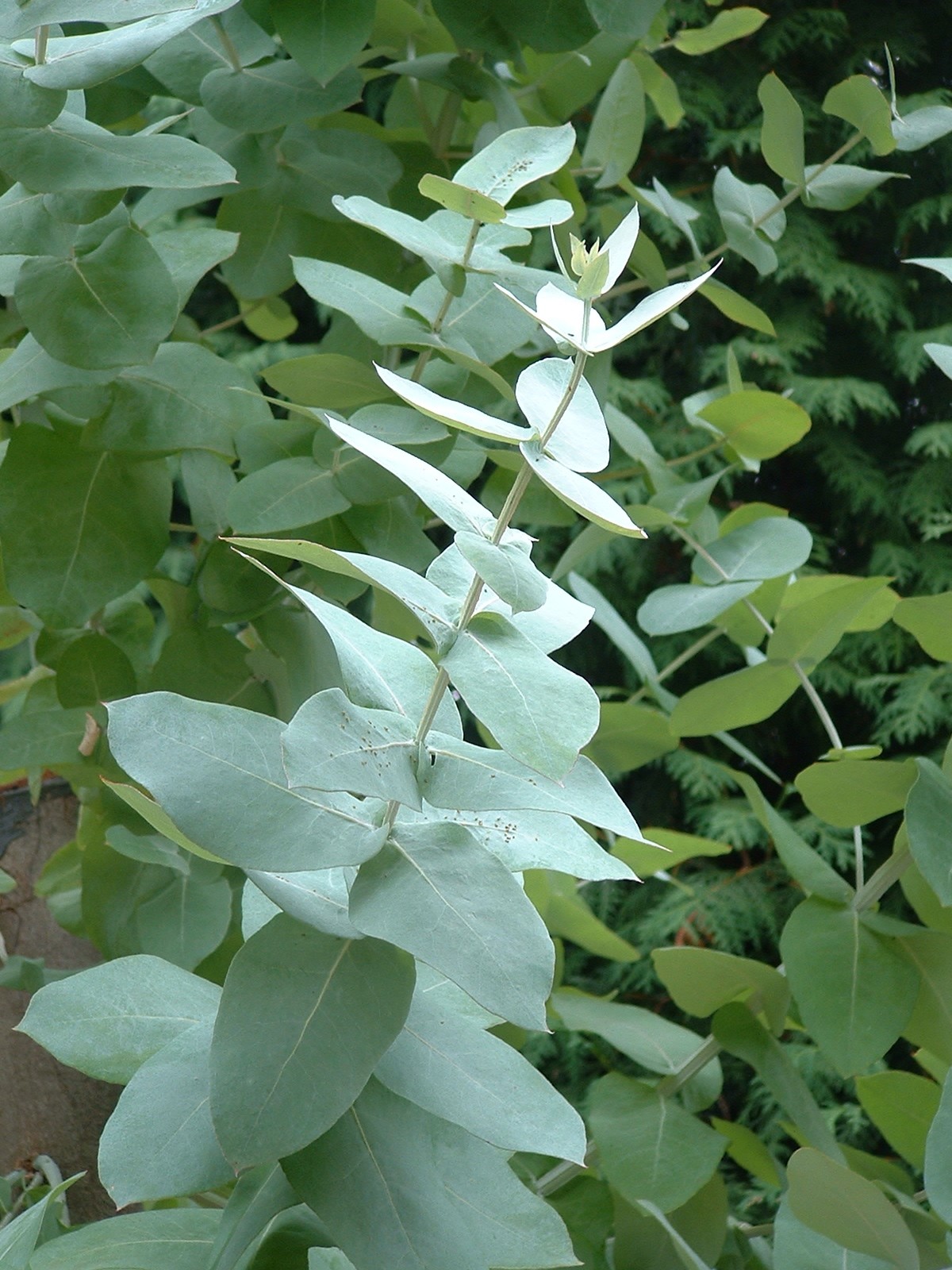
In the few weeks that I've been doing these Tips, I've noticed I haven't yet done one specifically for aromatherapy, so today I'm going to focus on the use of eucalyptus in aromatherapy.

In addition to being a beautiful plant, eucalyptus is also a really useful tool in aromatherapy. It can be helpful for a variety of ailments, including joint and muscle pains, poor circulation, and arthritis. However, at the request of my mom (who seems to always be suffering from sinus congestion), I am going to provide you all with a super quick and easy recipe for clearing stuffy sinuses.

My mom had asked me to create an essential oil blend that she can carry around with her to use whenever she needs, so I purchased a small 1-ounce bottle. I figured this size would be small enough for her to carry in her purse and take wherever she goes. As the carrier oil, I used jojoba oil because it's what I had on hand. Plus, jojoba oil is really great for moisturizing the skin, so if she wanted she could even place a few drops on her wrists instead of just taking a whiff of the oil in the bottle. To the jojoba oil, I added some eucalyptus oil. You can adjust this to your preference, but I put enough in hers so that it would clear her sinuses.

If you don't want to carry around a bottle of oil or you want something a bit more soothing, you could also inhale the eucalyptus fragrance as a vapor (like a homemade Vicks Vaporizer!). Simply boil water, add 2-3 drop of eucalyptus oil, and keep your face over the hot water, covering your head with a towel to keep in the vapors. When doing this with eucalyptus oil, be especially careful not to open your eyes because the oil can irritate them. This is particularly nice when you have a cold during the winter because the eucalyptus helps open the sinuses and the warm vapor helps soothe any irritation.

That's all for today, come back next Friday for my next Tip of the Week!  :)

Friday, October 14, 2011

Aromatherapy/Botanicals Tip of the Week

                  
Source
Source  


You know that icky feeling in your stomach that you sometimes get after a big meal? Or after eating something that your body just didn't agree with? For most, a stomachache would mean a trip to the medicine cabinet or drug store for some Pepto Bismol. But it turns out, there are plenty of natural herbal remedies out there that work just as well, if not better.

According to Earthy Family, the seeds from herbs such as dill, caraway, fennel, anise, coriander, and cumin all help to relieve gas. This explains why many Indian restaurants offer candied fennel and anise seeds after the meal. Earthy Family recommends placing a spoonful of the seeds in a mug with boiling water and allowing it to steep for five minutes to create a tea. Not only does this sound delicious, but I'm sure it would be a great way to cure an upset tummy.

An article on LiveStrong also recommends drinking chamomile or ginger tea to soothe indigestion and stomach cramps. Peppermint tea can also be especially helpful after a big meal it calms the muscles in your stomach, digestive tract, and intestines.

My favorite suggestion of all is the use of rosemary because that's my all-time favorite herb. According to LiveStrong, you can make a rosemary tea by steeping 2-4 grams of dried rosemary in boiling water, then straining before drinking. This should help with bloating, cramps, and indigestion. Yay, now I have yet another use for rosemary! ;)